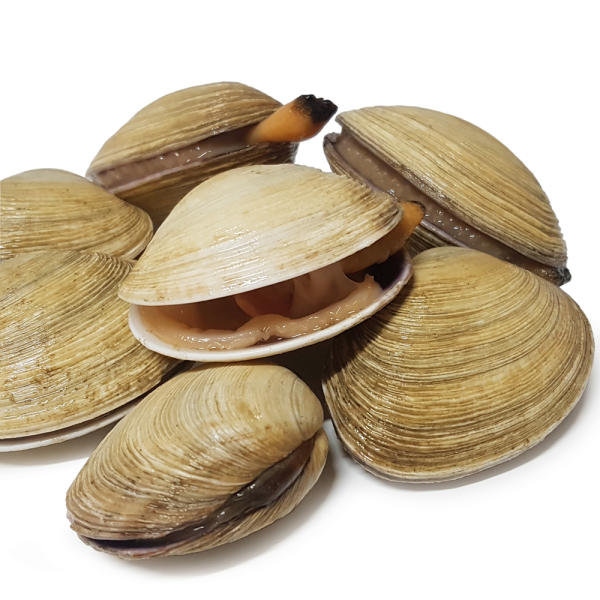
In Japanese, the clam species within the family Veneridae is called "hamaguri" (蛤). The name "hamanoguri浜の栗" is derived from combining the words "hama" (浜), meaning "beach," and "kuri" (栗), meaning "chestnut," due to its resemblance to a chestnut found on the beach.
Hamaguri is a popular ingredient in many representative Japanese dishes, including "suimono" (吸物), a clear soup, "sakamushi" (酒蒸し), steamed with sake, "yaki hamaguri" (焼き蛤), grilled hamaguri, "nuta" (ぬた), a marinated dish, and "shigure hamaguri" (時雨蛤), a simmered dish.
In sushi restaurants, hamaguri is typically not consumed raw. Instead, it is lightly cooked and marinated before being used in dishes, referred to as "nihamaguri" (煮蛤).
In Japan, hamaguri is often associated with marital harmony, and it is common to serve hamaguri suimono at wedding banquets.
Hamaguri clams naturally have two shells that fit perfectly together. However, when attempting to match the shells of different hamaguri clams, gaps may occur, preventing them from closing tightly. This appearance symbolizes a lifelong and happy relationship with a single partner.
On March 3rd, during the Hina Matsuri (雛祭り) festival, also known as Girls' Day or Doll's Festival, people consume hamaguri suimono, hoping for good relationships and fortunes for children.